
Key takeaways
- Dry, flaky scalp needs the right oil. Compare five scalp oils and treatments that moisturize, calm itch and support healthier hair and scalp.
A dry scalp can make even healthy hair look dull. Flakes, tightness and itching often start at the scalp, not at the ends, so a rinse-out conditioner alone rarely solves the problem. A scalp oil is massaged directly into the skin, where it softens flakes and supports the moisture barrier.
Disclosure: As an Amazon Associate, we earn from qualifying purchases made through links on this page, at no extra cost to you.
The five picks below cover the main ways to treat a dry scalp with oil: pure carrier oils, tea tree blends built for itch, and leave-in scalp treatments. The notes say plainly where a formula is a pure oil and where it is something else.
Our top picks
How to Choose a Hair Oil for a Dry Scalp
Start with the cause. A scalp that is simply dry needs moisture and a light barrier oil such as jojoba or castor oil. A scalp that itches and flakes benefits from tea tree, peppermint or rosemary, which cool the skin and loosen buildup. A scalp under braids, twists or a wig needs a pointed applicator or a dropper so the oil reaches the skin.
Check the ingredient list. Pure single oils list one ingredient. Blends list a carrier oil first, then the active botanicals. Water-based treatments can still help, but they are not pure oils: they absorb fast and leave little residue, while a true oil stays on the surface longer and seals moisture in.
Think about frequency. A light oil such as jojoba works daily and as a pre-wash treatment. A heavier castor oil suits a weekly intensive session. A tea tree treatment suits use two or three times a week, or whenever itch flares up.
Patch test first. Tea tree, peppermint and rosemary can irritate sensitive skin. Apply a small amount behind the ear, wait a day, then use it across the scalp. If flakes come with redness, swelling or sores, see a dermatologist instead of trying another oil.
1. OGX Extra Strength Refreshing Scalp + Rosemary Oil Mint Dry Scalp Treatment
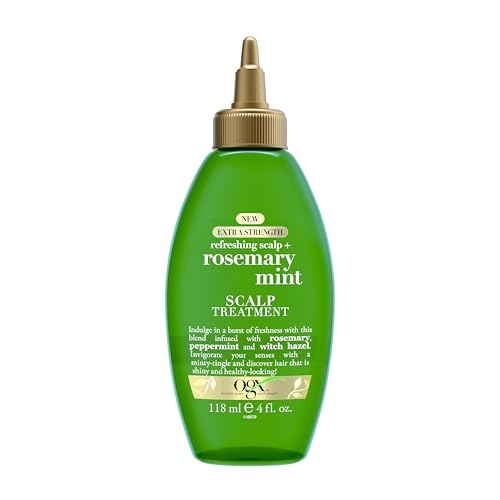
OGX built this treatment for scalps that feel dry and weighed down by buildup, pairing rosemary oil with mint in a leave-in formula that works without a rinse step.
Specs
- Extra Strength Refreshing Scalp + Rosemary Oil Mint Dry Scalp Treatment
- Peppermint and witch hazel scalp detox
- Clarifying leave-in formula
- Helps remove buildup and refresh the scalp
- Shiny hair finish
- 4 fl oz bottle
The pointed applicator places the treatment on the scalp through parted hair. Massage it in between washes and let it sit. It suits people who want a light leave-in option rather than a heavy oil.
2. NOW Solutions Jojoba Oil, 100% Pure

Jojoba oil is the closest plant oil to the scalp’s own sebum, which is why it is a classic choice for dry scalps. NOW Solutions offers it as a single-ingredient oil for face, hair and body.
Specs
- 100% pure jojoba oil (Simmondsia chinensis seed oil)
- Multi-purpose oil for face, hair and body
- 4 fl oz bottle
- Vitamin E
- Paraben free
- Natural and vegan
- Unscented
- Clear bottle with UV light protectant
- Made in the USA
Warm a few drops between the palms, massage them into the scalp, and leave the oil in overnight or for an hour before washing. As a single pure oil with no fragrance, it is a good starting point for sensitive scalps. The listing showed no featured offers available when checked.
3. Kreyol Essence Original Haitian Black Castor Oil

Castor oil is the heaviest oil in this lineup, and Haitian black castor oil is the traditional version, made from roasted castor beans. Kreyol Essence sells it in a small glass bottle with a dropper.
Specs
- 100% pure Haitian black castor oil
- For skin and hair
- Glass bottle with dropper
- Cold pressed
- Hexane free
- Natural humectant
- Paraben free
- 2 fl oz bottle
Use a few drops at a time on dry patches and along the hairline, where dryness often shows first. Its thickness means a little goes a long way, so it works well as a weekly treatment rather than a daily oil. The 2 oz size suits people who want to try castor oil before committing to a larger bottle.
4. Hollywood Beauty Tea Tree Oil, 16 fl oz

Tea tree oil is the classic answer to an itchy, flaky scalp, and Hollywood Beauty blends it with vitamin E and aloe in a large 16 oz bottle. It doubles as a hot oil treatment for hair, scalp and skin.
Specs
- Tea tree oil for hair, scalp and skin
- Moisturizes dry, itchy scalp
- Fungus fighter
- Blended with vitamin E and aloe
- No sulfates, parabens or mineral oil
- Works as a hot oil treatment
- 16 fl oz bottle
Apply it directly to the scalp and massage it in, or warm it gently for a hot oil treatment before washing. The large bottle suits regular use. Patch test first, since tea tree can irritate sensitive skin.
5. Difeel Rosemary and Mint Root Stimulator Oil with Biotin

Difeel pairs rosemary and mint with biotin in a root stimulator for the scalp. It is a lighter, water-based formula rather than a pure carrier oil, so it absorbs quickly.
Specs
- Rosemary and mint root stimulator oil with biotin
- Hair growth scalp treatment
- 7.1 oz bottle (210 ml)
- Mineral oil free
- Rosemary leaf oil and peppermint oil
- Menthol for a cooling feel
- Niacinamide and panthenol
Apply it to the scalp, massage gently, and leave it on for two to five minutes before rinsing. It suits people who want a stimulating treatment with a cooling feel and a lighter formula than a heavy oil. The listing showed no featured offers available when checked.
Which One Should You Pick?
For a simple, gentle daily oil, the NOW Solutions jojoba oil is the safest starting point: one ingredient, no fragrance, and a texture close to the scalp’s own oils. For itch and flakes, choose the Hollywood Beauty tea tree oil or the OGX rosemary mint treatment, depending on whether you want a pure oil or a leave-in formula. For stubborn dry patches, the Kreyol Essence castor oil is the strongest weekly option. For a light, stimulating treatment, the Difeel rosemary and mint stimulator fills that role. Use your pick consistently for several weeks, since scalp skin renews slowly.
Frequently Asked Questions
How often should I oil a dry scalp?
Two or three times a week is a good starting point. A light oil such as jojoba can be used daily in small amounts, while a heavy oil such as castor oil works better weekly. If the scalp feels greasy, cut back to once a week.
Can I leave scalp oil on overnight?
Yes, for pure carrier oils such as jojoba and castor oil. Apply a small amount, massage it in, cover the hair overnight, and wash it out in the morning. Water-based treatments should follow the label directions, since some are meant to be rinsed out after a few minutes.
Will hair oil help with dandruff?
Oil can soften flakes and calm a dry, itchy scalp when the cause is dryness. It does not treat fungal dandruff on its own. If flakes persist, or if the scalp is red and sore, a medicated shampoo or a dermatologist visit is the better next step.
Can I use these oils under a wig?
Yes. Apply the oil to the scalp before putting the wig on, using a dropper or pointed applicator to reach the skin. Use a light hand so the oil does not soak into the wig cap, and wash the scalp regularly to prevent buildup.
Conclusion
A dry scalp responds best to direct care, and a scalp oil puts moisture and soothing botanicals where they are needed. The five picks above cover the main approaches: a leave-in rosemary treatment, a pure jojoba oil, a heavy castor oil, a tea tree blend and a light rosemary and mint stimulator. Choose the one that matches the scalp’s main problem and give it several weeks of steady use.
FAQ
Which One Should You Pick?
How often should I oil a dry scalp?
Can I leave scalp oil on overnight?
Will hair oil help with dandruff?
Can I use these oils under a wig?
More from Amazon
Programs that pair well with the guide above. Offers and eligibility are set by Amazon and may change.
Set up recurring deliveries of everyday items on eligible products. Terms and savings are set by Amazon.
Explore Subscribe & SaveFree shipping on eligible items, Prime Video and more. Eligible new members can start with a free trial.
Start a Prime free trialA Prime membership for ages 18-24 with a trial period. Eligibility is set by Amazon.
See Prime for Young AdultsAudiobooks and podcasts to listen to on the go. Eligible new members can start with a free trial.
Try Audible freeAs an Amazon Associate we earn from qualifying purchases.
Write Your Review
No reviews yet. Be the first to share your experience!