
Key takeaways
- Find the best ergonomic upholstered office chairs for long workdays, with padded lumbar support, dense cushions and adjustments that fit your body.
A long workday asks a lot of a chair. You sit down for the first call, shift for focused work, lean back to read, reach for a notebook, and return to the keyboard again and again. If the seat is too soft, you sink and slouch. If the back is flat, your lower back does the work the chair should be doing. If the arms sit at the wrong height, your shoulders creep upward without you noticing until they ache.


Upholstery here means a padded seat and back covered in fabric or leather-like material, and the shape under the padding matters as much as the softness on top. This guide focuses on exactly that type: ergonomic office chairs with upholstered seats and backs, built for long workdays. It explains how to judge lumbar support, cushion density, arm and height adjustment, tilt, upholstery material, and weight capacity, then walks through a short list of chairs that fit the brief in different ways. Two are long-established ergonomic designs with fabric upholstery and a wide range of adjustments. Two are padded leather executive-style chairs with built-in lumbar mechanisms and thick seat cushions. None of them is a mesh-only chair, and none is a gaming chair.
As an Amazon Associate we earn from qualifying purchases
How to Choose an Ergonomic Upholstered Office Chair
Lumbar support that matches your back
Lumbar support is the part of the chair that meets the inward curve of your lower back. For long days, look for support you can change, not just a fixed bump. Useful forms include a lumbar pad that moves up and down, a firmness control that makes the lower back feel firmer or softer, a back that flexes and follows you as you move, and, on some executive chairs, an inflatable or pop-out lumbar section you can adjust to fill the gap behind your waist.
The right setting is subtle. The support should fill the space behind your lower back so you can sit back without a hollow gap, but it should not push you forward or create a single hard pressure point. If a listing only says a chair is ergonomic without describing any lumbar feature, treat that claim with caution and look for a specific mechanism in the product description.
Seat cushion density and shape
An upholstered seat lives or dies by its foam. Very soft foam feels welcoming for a few minutes and then compresses, leaving you sitting on the hard base underneath. Denser foam, layered foam, or a seat built with a spring or pixel-style support structure tends to hold its shape for longer and distribute weight over a wider area.
Look in the listing for clues rather than adjectives alone. Mentions of foam fill, layered construction, pocket springs, or a thick cushion measurement tell you more than the word comfortable. A seat with a gently rounded front edge, often called a waterfall edge, can also help, because a sharp front edge can press into the backs of the thighs.
Adjustable arms, height, and tilt
Seat height should let your feet rest flat on the floor, or on a footrest, with your knees at roughly a right angle. Pneumatic height adjustment is standard on the chairs in this guide, but the range matters. Check the listed seat height range against your desk height and your own leg length, especially if you are notably taller or shorter than average.
Armrests should support your forearms without lifting your shoulders. Height adjustment is the minimum worth having. Arms that also move in width, depth, or angle, often described as fully adjustable or with a number of directions, make it easier to bring the pads under your elbows when you type and move them out of the way when you do not. Flip-up arms serve a different purpose: they let you push the chair close under a desk and suit smaller rooms, though they usually offer less fine adjustment while in use.
Tilt is how you change posture through the day. Look for a recline with a tension control you can set for your body weight, and a tilt lock or limiter so you can hold a preferred angle. A chair that only sits bolt upright encourages one frozen posture, which is rarely comfortable for eight or more hours, however good the padding is.
Upholstery material: fabric and leather options
Fabric upholstery is generally breathable, grippy, and forgiving. You are less likely to slide forward on a fabric seat, and fabric tends to feel neutral in temperature when you first sit down. The listings in this guide describe polyester fabric and named textile weaves. Fabric can absorb spills more readily than a smooth surface, so check the care instructions, which for several models are spot clean or wipe clean.
Leather and faux leather upholstery give a smoother, more formal executive look and are usually easier to wipe down. The trade-off is that a smooth surface can feel warmer and you may slide a little more, and the quality of the surface material affects how it ages. On padded leather chairs, check whether the arms and headrest are also padded, since those contact points shape how the chair feels in daily use.
Weight capacity and build
Weight capacity is a safety and durability limit set by the maker, not a rough guide. Stay within the listed maximum, and leave some margin if you can. Capacity also hints at the strength of the base, gas lift, and frame underneath the upholstery. The chairs below list capacities from the product information that was available for each model, and those figures differ, so match the chair to the person who will use it.
The Chairs in This Guide
Herman Miller Embody Ergonomic Office Chair
The Embody is Herman Miller’s ergonomic office chair built around movement rather than a single fixed posture. The listing for this configuration describes a Black Rhythm fabric version with a graphite frame and base, fully adjustable arms, and carpet casters. Its form factor is listed as upholstered, its fabric type as fabric, and its fill material as foam, which places it squarely in the category this guide covers: a padded, fabric-covered seat and back rather than an exposed mesh chair.
The adjustment set listed includes a tilt limiter, adjustable seat depth, and fully adjustable arms. Adjustable seat depth is particularly valuable in an upholstered chair because it lets you keep the back support in contact with your back while leaving that small gap behind the knees. The maximum weight recommendation in the listing is 300 pounds. Care is described as spot clean, which is typical for a fabric chair of this kind.
Choose the Embody if you want a fabric ergonomic chair whose back actively follows your spine and whose seat depth you can change, and if the idea of distributed support appeals more than a thick, sofa-like cushion. Confirm the exact fabric, colour, and caster type on the listing, because Embody chairs are sold in several textile and frame combinations.
Steelcase Leap Office Chair
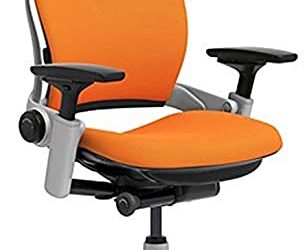
The Leap is Steelcase’s long-running ergonomic office chair, and the listing for this Onyx configuration describes it with an upholstered back and seat, a fabric type of polyester, and foam fill. That makes it a classic example of the type in this guide: a fully padded, fabric-covered task chair with a deep set of ergonomic adjustments underneath the upholstery.
Steelcase calls its back technology LiveBack. As described in the listing, the contoured backrest changes shape as you move, aiming to support the whole spine in its natural S shape. Lumbar support is handled in two ways: the lumbar height can be adjusted, and a separate lower back firmness control lets you decide how assertive that support feels. For long days, that second control is useful because the right amount of lower back pressure in the morning can feel like too much by late afternoon, and you can change it without changing chairs.
The rest of the adjustment list in the product description is extensive: adjustable seat depth, seat height, arms that adjust in height, width, pivot, and depth, recline tension adjustment, and a recline lock with multiple positions. A seat glide system is described as letting the seat move forward as you recline, so you can lean back without losing your working position relative to the desk. The maximum weight recommendation in the listing is 400 pounds, the highest among the chairs in this guide, and the chair is described as arriving fully assembled.
Choose the Leap if you want fabric upholstery paired with the widest set of fit adjustments here, especially separate control over lumbar height and firmness. As with the Embody, check the specific listing carefully, since Leap chairs appear in different colours, fabrics, and seller configurations.
COLAMY High Back Executive Office Chair
This COLAMY chair takes a different route to the same brief. Instead of a technical fabric task chair, it is a high back executive office chair in padded leather, listed with an upholstered leather feature and an upholstered form factor, with foam fill. If you prefer the look and wipe-clean surface of leather upholstery and a taller back with a padded headrest area, this is the style to consider.
Its distinguishing feature is the lumbar support. The listing describes an adjustable lumbar system you inflate by pressing an airbag, so the support in the lower back can be increased or reduced to suit your own curve. That is a more direct, physical form of adjustment than a fixed lumbar pad, and for a long workday it means you can add support when you sit upright for focused work and soften it when you recline.
The seat is described as a double padded cushion with built-in spring pockets, intended to give the seat an elasticity similar in concept to a sofa or mattress cushion, rather than a single slab of foam. The listed seat height range is 18.6 to 22.4 inches, the back tilt angle is listed as 90 to 110 degrees, and the arms are flip-up armrests with soft faux leather padding, so you can raise them to tuck the chair under a desk. Simple pneumatic controls handle raising and lowering the seat and rocking back.
Choose this COLAMY model if you want leather upholstery, a high back, and lumbar support you can inflate to your own preference, and if flip-up arms suit a home office where space matters. Its tilt range is narrower than the recline systems on the task chairs above, so if you spend large parts of the day reclined well back, compare that range carefully before deciding.
COLAMY Ergonomic Office Chair with Pop-Out Lumbar Support

The second COLAMY chair in this guide is also a high back ergonomic executive chair in upholstered leather, but it uses a different lumbar idea and adds an adjustable headrest. The listing describes a pop-out lumbar support that moves out to meet the lower back, an adjustable headrest, flip-up arms, upgraded casters, and a thick cushion for comfort, in black.
The seat cushion is the headline specification here. The product description gives a cushion thickness figure and describes it as high-density foam, which is the kind of detail worth paying attention to in an upholstered chair: density and thickness together determine whether a seat still feels supportive after hours of sitting, or whether it compresses flat. Combined with the padded, solid back style described in the listing, this is a chair designed around a plush, cushioned feel rather than a firm, minimal task seat.
The maximum weight recommendation in the listing is 300 pounds. The headrest adjustment matters for taller users and for anyone who reclines to read or join calls, because it lets you place support behind the head and neck instead of accepting wherever a fixed headrest happens to land. Flip-up arms again help in smaller spaces and at desks with limited clearance.
Choose this model if you want the thickest described seat cushion in this guide, leather upholstery, and both lumbar and headrest support in an executive format. Assembly is required, with instructions included according to the listing, so allow time to build it and check every adjustment once it is together.
Which One Should You Pick?
Start with the kind of support you prefer. If you want a chair whose back moves with you and whose lumbar support can be fine-tuned, the two fabric task chairs are the natural starting point. The Embody centres on a flexible back structure and adjustable seat depth. The Leap adds a separate lower back firmness control, a wider listed weight capacity, and arms that adjust in four directions. Between those two, the decision is usually about which back and lumbar approach sounds closer to how you sit, and which fabric and configuration is available in the listing that suits your floor type.
If you prefer a traditional executive look, a taller padded back, and a smoother surface you can wipe clean, look at the two COLAMY chairs. Choose the inflatable lumbar model if you like the idea of pumping the lower back support up or down yourself and want a spring-pocket seat. Choose the pop-out lumbar model if a thicker described seat cushion and an adjustable headrest matter more to you.
Then check the unglamorous details before you order any of them. Confirm the weight capacity covers the user with margin. Confirm the seat height range works with your desk. Confirm whether the casters suit carpet or hard flooring. Confirm whether the chair arrives assembled or needs assembly. And confirm that the colour and fabric in the listing title are the ones you actually want, because several of these chairs are sold in multiple variants that look similar at a glance.
Setup and Posture Notes for Long Workdays
Set the chair up in a deliberate order. First, adjust the seat height so your feet are flat and supported. Second, sit fully back and set the seat depth, if your chair has that adjustment, so a small gap remains behind your knees. Third, position the lumbar support so it fills the curve of your lower back without pushing you forward. Fourth, set the arms so your forearms rest lightly with your shoulders relaxed. Last, set the tilt tension so you can recline with gentle pressure rather than fighting the chair or falling back.
Through the day, use the tilt. Alternate between an upright position for typing, a slightly reclined position for calls and reading, and standing or walking breaks away from the chair entirely. Small changes in back angle change where pressure falls on the seat cushion and lower back, which is one reason an adjustable upholstered chair can feel better over a long day than a fixed chair with equally good padding.
Frequently Asked Questions
Are upholstered chairs better than mesh chairs for long workdays?
Neither type is automatically better. Upholstered chairs offer padded contact, a warmer feel, and often a firmer sense of support under the thighs and back, and they suit people who dislike the hammock feel of a mesh seat. Mesh chairs offer more airflow. For long days, the deciding factors are fit, lumbar adjustment, and cushion quality, not the category label alone. This guide covers upholstered chairs because that is the type many buyers specifically ask for.
How firm should the seat cushion be?
Firm enough that you do not sink through it to the base, and soft enough that you are not perched on a hard surface. Denser or layered foam and spring-based seats are described in several listings here because they aim to hold shape over time. If a listing gives a cushion thickness or describes the foam, use that information rather than relying on the word soft in a title.
What lumbar support is best if my lower back aches by the afternoon?
Look for adjustability you will actually use. A lumbar pad that moves in height, a firmness control, an inflatable lumbar section, or a pop-out support all let you change the pressure during the day. Set it to fill the curve of your lower back, and reduce it if it creates a single sore spot. A chair is not a medical treatment, so persistent pain is a reason to seek professional advice as well as to review your setup.
How much weight capacity do I need?
At minimum, a listed capacity above the weight of the person who will use the chair, ideally with margin for durability. In this guide the listed recommendations range from 300 pounds to 400 pounds depending on the model, taken from each product listing. Always check the exact listing you buy from, because capacities can differ between variants.
Do I need fully adjustable arms?
Height-adjustable arms are the baseline for long desk work. Arms that also adjust in width, depth, or angle help if you are broader or narrower than average, or if you move between typing and other tasks. Flip-up arms are a practical choice for small rooms and desks with low clearance, even though they offer less fine adjustment while you work.
FAQ
Which One Should You Pick?
Are upholstered chairs better than mesh chairs for long workdays?
How firm should the seat cushion be?
What lumbar support is best if my lower back aches by the afternoon?
How much weight capacity do I need?
Do I need fully adjustable arms?
More from Amazon
Programs that pair well with the guide above. Offers and eligibility are set by Amazon and may change.
Set up recurring deliveries of everyday items on eligible products. Terms and savings are set by Amazon.
Explore Subscribe & SaveFree shipping on eligible items, Prime Video and more. Eligible new members can start with a free trial.
Start a Prime free trialA Prime membership for ages 18-24 with a trial period. Eligibility is set by Amazon.
See Prime for Young AdultsAudiobooks and podcasts to listen to on the go. Eligible new members can start with a free trial.
Try Audible freeAs an Amazon Associate we earn from qualifying purchases.




Write Your Review
No reviews yet. Be the first to share your experience!